From Hitler-Kampfbahn to MHP Arena: Stuttgart's Evolving Football Temple
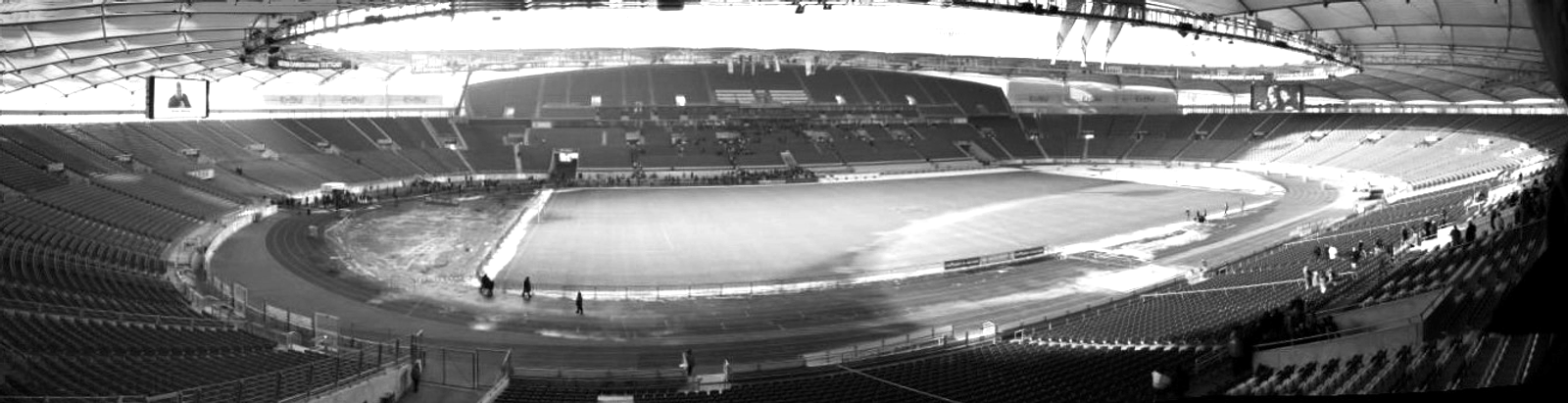
The MHP Arena occupies a singular place in Stuttgart's urban fabric, its steel and membrane structure rising from the Neckarpark as a layered record of the city's twentieth-century transformations, from the original 1933 construction by architect Paul Bonatz to the extensive 2009-2011 renovation that removed the athletics track and introduced a continuous second tier beneath an inward-extending roof. That first iteration, known then as the Adolf-Hitler-Kampfbahn, seated between thirty-five and forty thousand spectators around a running track that separated the stands from the pitch in the manner of many pre-war German venues. Subsequent decades brought incremental adjustments that reflected Stuttgart's growing automotive identity, yet the fundamental masonry and steel frame endured until the most recent overhaul recast the entire bowl.
The 2009-2011 works, led by asp architekten in collaboration with sbp engineers, lowered the playing surface, eliminated the track, and added a second tier that runs without interruption around the ground while the new PES-PVC membrane roof, covering some forty thousand square metres, extends inward to protect spectators without casting deep shadow across the turf. These changes increased capacity to approximately sixty thousand and aligned the arena more closely with contemporary Bundesliga standards, though the essential footprint remained anchored in the Neckarpark district where Mercedes-Benz and Porsche facilities stand nearby. The sponsorship renaming to MHP Arena in 2023, after the management consultancy, simply added another stratum to a naming history that already included Gottlieb-Daimler-Stadion and Mercedes-Benz Arena.
On matchday the concourse fills with supporters moving through the concrete plazas that surround the bowl, their procession framed by the same urban parkland that once hosted multi-use events long before the current sponsorship era. Borussia Mönchengladbach arrive to contest a Bundesliga fixture inside a venue whose every structural decision, from the original Bonatz design to the membrane addition, mirrors Stuttgart's own evolution from industrial centre to modern sporting city. The architecture does not announce its history loudly, yet the continuous curva and the lowered pitch level carry the accumulated weight of those prior civic choices.
What distinguishes the arena from many peers is precisely this refusal to erase earlier iterations, allowing the 1933 origins and the 2011 membrane intervention to coexist within the same steel frame and to shape the experience of the crowd that gathers for the evening kickoff.