Sánchez-Pizjuán Reopens Its Gates to La Liga
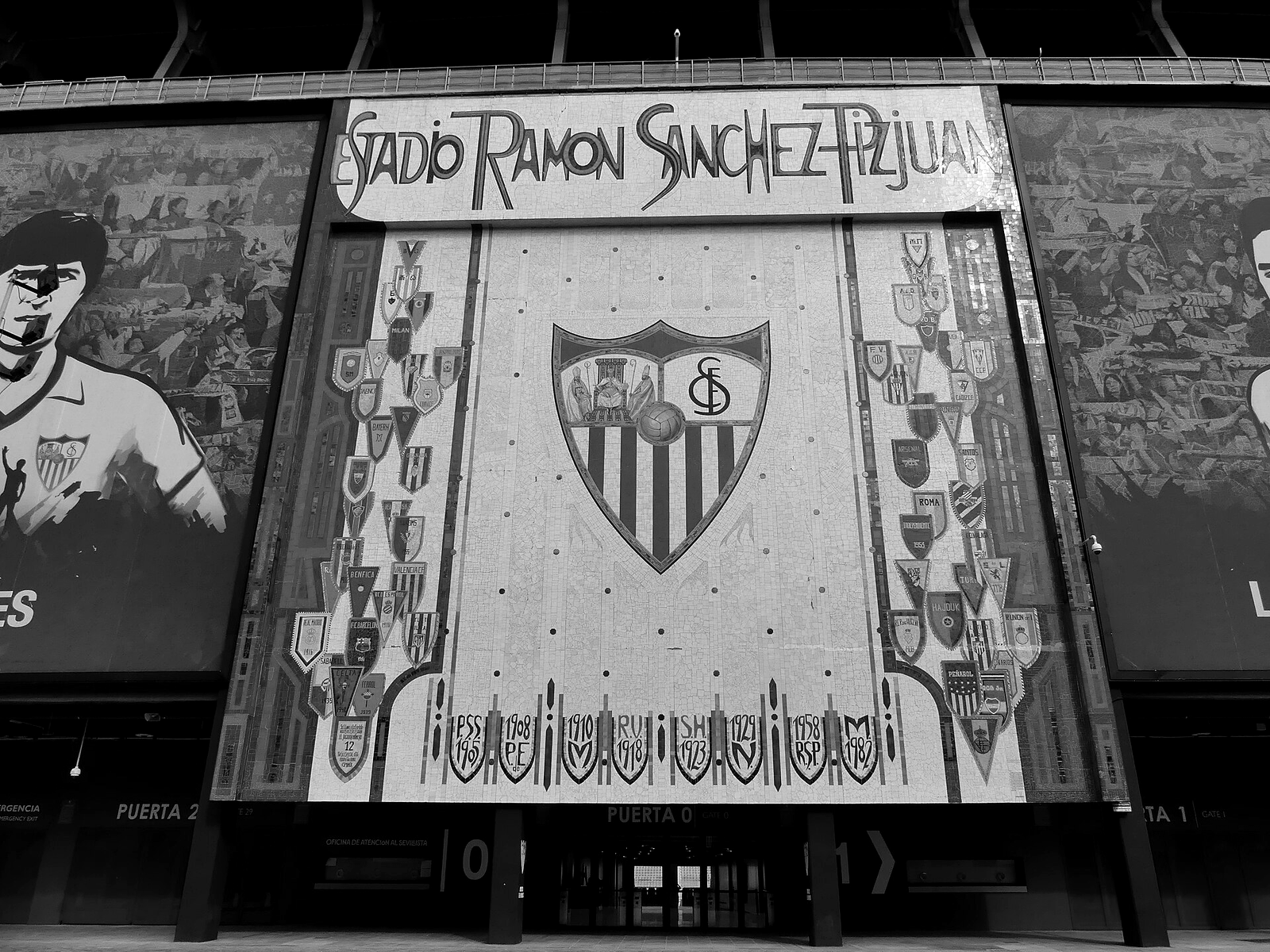
The Ramón Sánchez-Pizjuán resumes its place in the weekly calendar of Spanish football on Monday evening, its masonry and tiered stands once again framing the contest between Sevilla and Osasuna after thirty seven days without a league fixture inside its walls. The last such occasion came on 19 September when Barcelona visited, since when the ground has hosted only the annual Trofeo Antonio Puerta friendly. This return coincides with the beginning of a congested home sequence that will see the venue stage three matches in less than a month, each one feeding into the larger rhythm of the season and the approaching Seville derby.
The neighbourhood of Nervión, with its residential streets and proximity to the city centre, has long absorbed the stadium into its daily fabric, the concrete footprint shaping local movement on matchdays much as it has since the ground's major reconstructions in previous decades. Fans gather along the avenues leading to the entrances, the concourse filling with the particular anticipation that follows any extended absence from league action. The architecture itself, an amphitheatre of concrete and steel designed to maximise sightlines and atmosphere, stands ready to contain the noise of a full house once more.
Seville has watched its principal football venue sit quiet through the international break and the intervening weeks, the absence of league football at Nervión leaving the surrounding district to its ordinary rhythms rather than the periodic processions of supporters. Local reports note that the thirty seven day interval marks the longest such drought at the stadium in recent seasons, a pause that ends with this fixture against Osasuna and then accelerates into a run of home games that will test the pitch and the stands alike. The building, positioned at the edge of the Nervión district, functions as both a sporting arena and a civic landmark whose schedule dictates the tempo of weekend life for thousands of residents.
Three home fixtures in quick succession will return the Ramón Sánchez-Pizjuán to the centre of the city's football conversation, each match carrying the weight of accumulated expectation after the long wait. The concrete curves and covered stands, engineered to hold the heat and the sound within the bowl, prepare for a sequence that leads directly toward the Seville derby and the heightened stakes that fixture always brings to the neighbourhood. In this sense the reopening is not merely administrative but structural, a reassertion of the stadium's role within the urban calendar that extends beyond any single result.