Penzo Stages Its Final Serie A Fixture
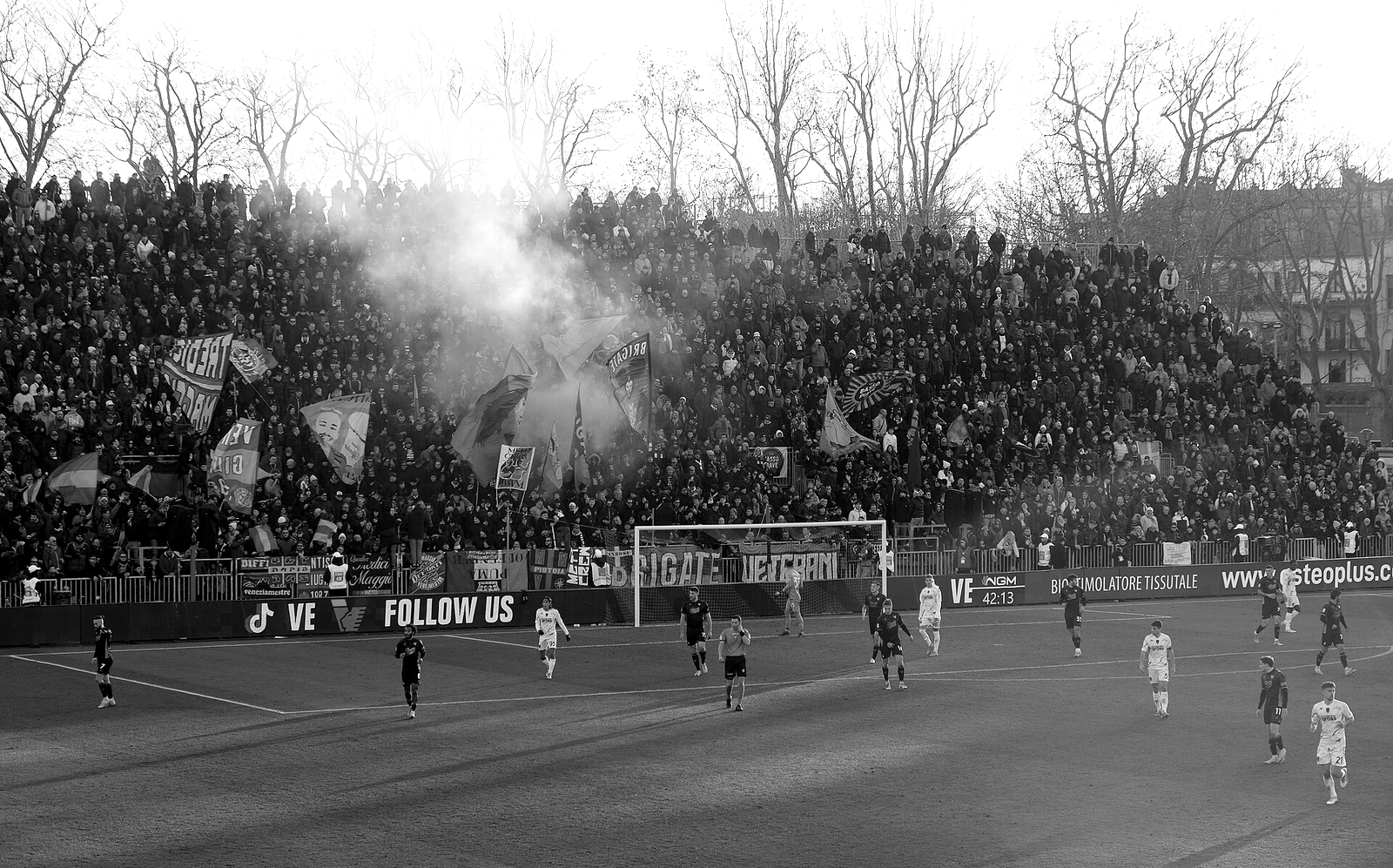
The Stadio Pier Luigi Penzo stands on its narrow island in the Venetian lagoon as the last reminder of an older footballing Italy, its single permanent stand and tubular temporary structures braced against the same salt winds that have shaped the city for centuries. On the evening of 28 October the ground prepares to receive Internazionale for what will be its final appearance in Serie A before relocation, the match framed by the water that laps at the perimeter and the low concrete concourses that have survived decades of adaptation. Access remains by vaporetto from the city proper, a journey that already folds the fixture into Venice's distinctive urban rhythm rather than isolating it in a suburban park.
The Penzo's history records a 1970 tornado that stripped away much of the original fabric and forced the installation of the temporary tubular seating that still defines the western side today. Those same structures, never intended as permanent, have carried the club through successive promotions and relegations while the record crowd of 26,000, set against Milan in 1966, remains a distant benchmark for a venue now capped at 12,000. The lagoon itself supplies the constant atmospheric pressure: high water can flood the lower concourses, and every winter storm tests the exposed masonry in ways that inland stadiums never experience.
A new 18,500-capacity oval designed by Populous will replace the Penzo within two seasons, its wave-inspired roof intended to echo the surrounding water rather than resist it. The decision to move reflects both the structural limits of the present site and the commercial pressures that now govern Serie A venue standards, yet the departure also severs a direct physical link between the club and the lagoon that has defined its identity since the ground opened in 1913. Supporters who travel by boat on matchdays will lose that particular arrival ritual once the new ground opens on the mainland.
Inter's visit therefore arrives as a valediction of sorts, the visiting players and travelling supporters encountering a ground whose compact scale and water-bound setting produce an intimacy rarely found in modern Italian football. The single covered stand still shelters the most vocal home support, while the temporary seating opposite offers little protection from the elements that sweep across the lagoon. In this sense the fixture belongs as much to the architecture of the place as to the league table, a last occasion when the professional game occupies this particular concrete footprint before the city reclaims the island for other uses.