Volksparkstadion Rebuilds From Rubble Into Modern Arena
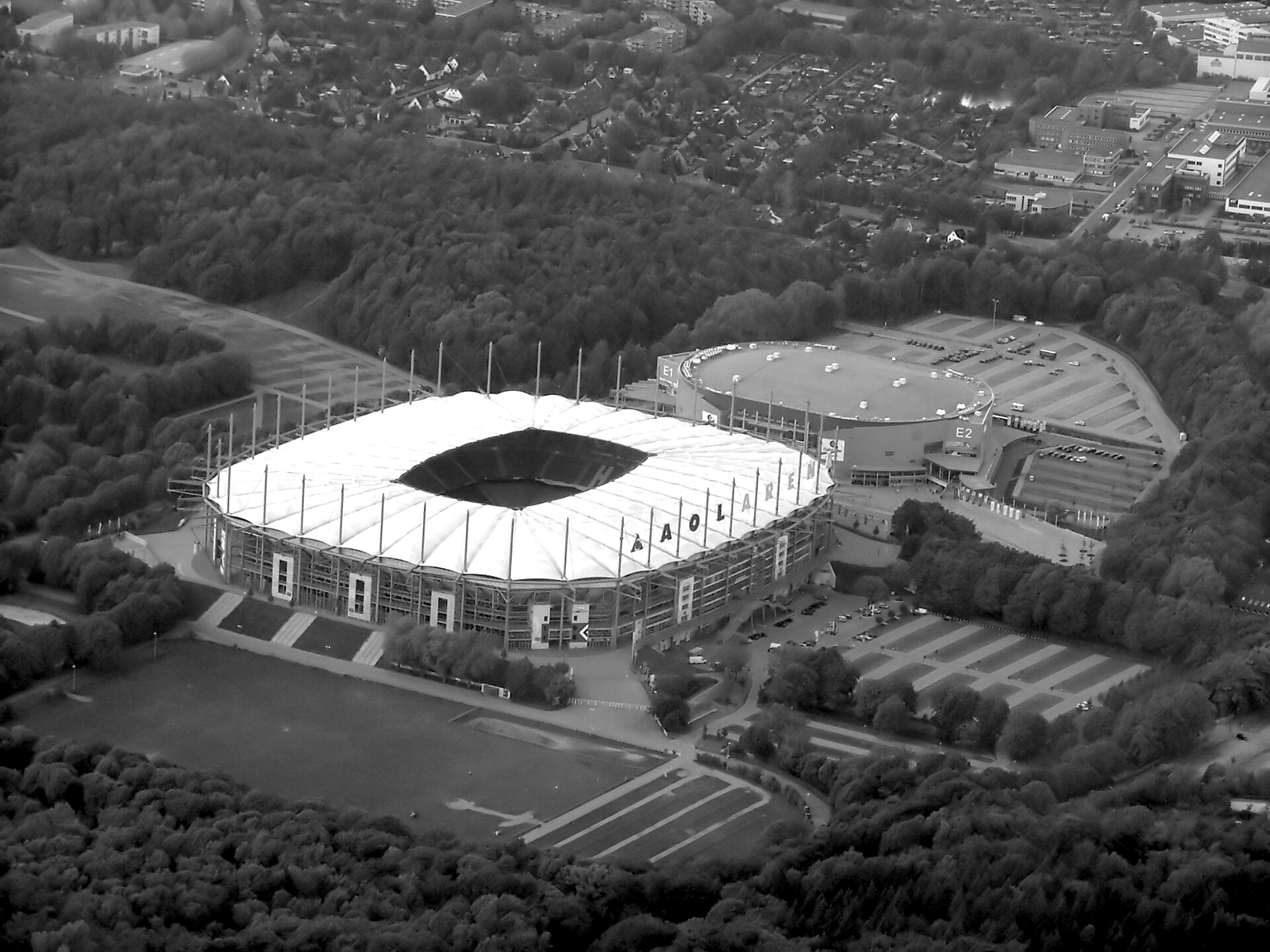
Volksparkstadion occupies a singular place in Bundesliga infrastructure. Constructed between 1951 and 1953 on the site of the former Altonaer Stadion, the ground incorporated rubble from the destroyed Eimsbüttel district as foundational material. The 1998 to 2000 renovation by MOS Architekten rotated the pitch ninety degrees, eliminated the athletics track, and installed a cable-net roof engineered by Schlaich Bergermann. Hamburger SV now owns the 57,000-capacity venue outright.
The roof comprises forty transparent membrane fields suspended on radial cable trusses. This design admits daylight while directing crowd noise downward toward the pitch, a technical choice that reinforces the intimate relationship between stands and playing surface. Standing terraces account for a substantial share of the total capacity, preserving the verein tradition of accessible admission even as broadcast revenues rise. The symmetrical bowl form places spectators close to the action, a configuration that UEFA Category 4 standards reward with elite hosting privileges.
Ownership by the club itself distinguishes Volksparkstadion from many contemporary Bundesliga grounds financed through municipal or external investment vehicles. The 50+1 rule permits such direct control when historical structures predate the current governance framework. HSV has used this position to maintain standing areas and to programme the venue for both domestic league fixtures and occasional international tournaments, including the 2006 World Cup and Euro 2024. The arrangement concentrates financial responsibility for maintenance and upgrades within the verein’s own accounts rather than dispersing it across public budgets.
The upcoming fixture against Borussia Monchengladbach therefore occurs inside an arena whose physical evolution mirrors broader shifts in German football economics. Post-war reconstruction from district debris gave way to a late-1990s modernisation that prioritised acoustic performance and visual proximity. Those choices continue to shape revenue potential through higher attendances and the stadium’s eligibility for premium European matches. The transparent roof and retained terraces represent deliberate policy decisions about how a member-owned club monetises its physical plant without surrendering control to external capital.